

Quick note before we begin:
Before any of this Starbucks/Marico news hit, I recorded a conversation with Dr. Pranesh Sridharan, head of the Alternative Protein Innovation Centre (APIC) near Bangalore. If you want the bigger “why India, why now?” context (and the very unfiltered truth on what’s holding protein manufacturing back), listen here:
OR here:
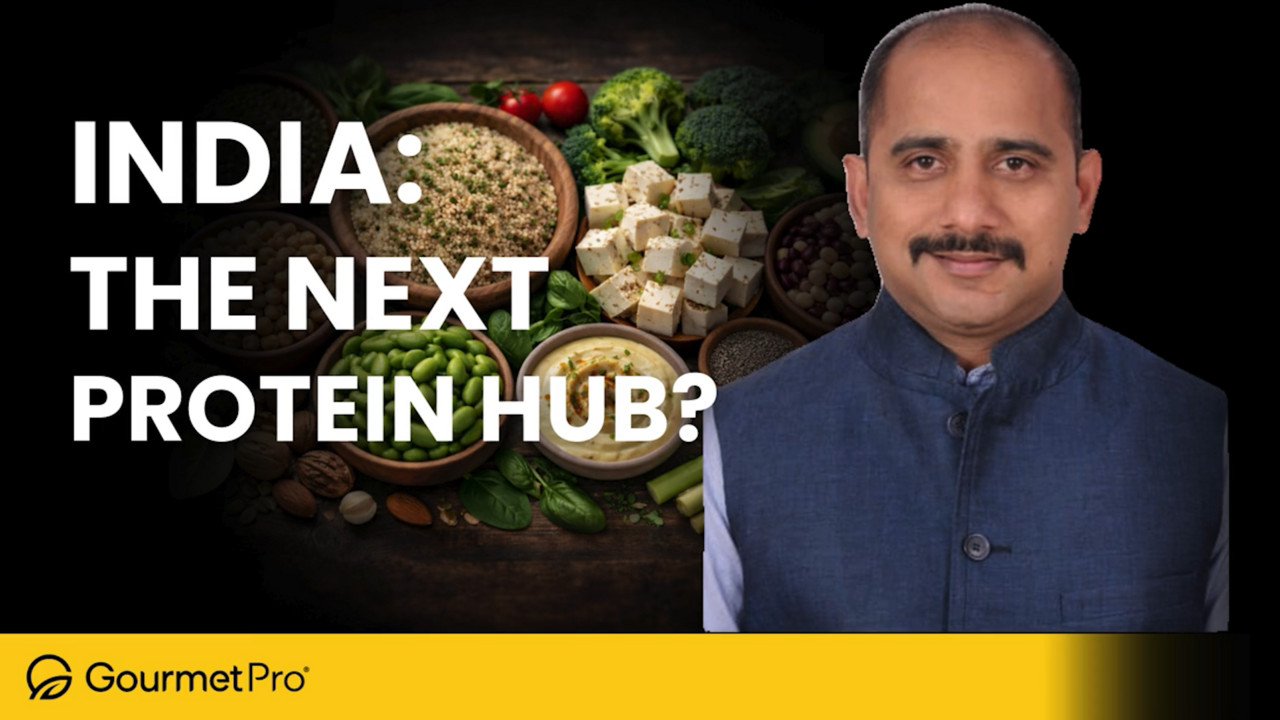
Now let’s get into it.
I keep telling myself to ignore protein.
I’ve talked about it A LOT. I’ve shared my views (only half-jokingly) that it’s probably illegal now to not have a protein option, no matter what category you’re in. Cookies? Protein cookie. Coffee? Protein coffee. Water? Don’t tempt them. Candy. Stop it!
And yet, every time I try to look away… protein news gets thrown right back in my face. At this point, avoiding it feels like trying to dodge the rain in the monsoon season. You can try. You can don a raincoat, gumboots, and a gigantic-ass umbrella, you’ll still get soaked.
Take India, for example. We’ve gone from “definitely protein-deficient” to a full-blown debate about whether we even are. Meanwhile, protein may be becoming one of the most revealing signals of consumer spending power and behavior. Honestly, I’m starting to think we should retire the Big Mac Index and replace it with a protein-based system to measure purchasing power parity. It might be a far more accurate indication of currency strength (IYKYK… not saying it out loud). And it would be a lot more inclusive too.
So let’s look at two things happening in India right now that make it harder than ever to dismiss protein as just another global trend trying these shoes on for size.
Signal #1: Starbucks takes protein from supplement to menu
Just a couple of weeks ago, Starbucks India rolled out a protein cold foam across its 500-ish stores. This foam apparently adds 11–18g of protein to a wide range of cold drinks, depending on size, and comes in vanilla, chocolate, and banana flavors. It’s an INR50 add-on decision.
The protein is from a startup called SuperYou, which makes a vegan protein powder from biofermented brewer’s yeast, with added probiotics. It’s not whey or soy or pea & rice. This in itself is a genuinely interesting choice, in an Indian context where protein awareness is rising and lactose intolerance is increasingly part of the conversation. I do, however, think a lot of education will be needed to ensure that this is alcohol free for a lot of consumers.

This is also a pretty ballsy move for Starbucks, as it makes India the only country outside of the US and Canada to get protein cold foams. And it’s the only country using a non-animal protein source (the US and Canada use whey), which is mind-blowing considering how much we love our dairy, lactose intolerance notwithstanding.
What Starbucks India is essentially saying is that you don’t need to start taking protein. Just do what you’re doing and upgrade it. The move taps into an existing habit (coffee consumption, not Starbucks consumption) and allows consumers to customize their drinks in a very functional way, whenever they want. I’m waiting for chai to do this, then it would have really arrived. This move even has the potential to be an entry point for customers who may be looking at more protein in their diets, especially non-dairy versions.
Now, I did hear some chatter that this was a low-commitment way into the protein market, at just INR50 a pop (a little over half a dollar). But I don’t fully agree. A coffee at Starbucks is expensive by most Indian standards (~INR300/US$3), so it’s not exactly protein for the masses. But compared to a 1kg pack of protein powder, which can start at INR3,000-ish (~US$33), this may be a good trial run without breaking the bank.

Ad for the protein foam for Starbucks members
The bigger story, however, will be the ripple effect. Starbucks just gave every coffee chain (and tea chain) and independent café a shiny new lever: make protein optional, customizable, and not annoying. I expect to see a lot of me-too brands with different protein bases, different formats, and a lot of experimentation.
Signal #2: Marico circling Cosmix is the corporate stamp of approval
Marico, one of India’s biggest FMCG companies, is allegedly in talks to acquire plant-protein and wellness brand Cosmix for around INR3 billion (~US$33 million). Even if the deal hasn’t closed yet, “new” protein (currently dominated by startups) is becoming a lane big FMCG wants to own.
Cosmix is said to have posted a revenue of INR0.24 billion (~US$2.6 million) in FY24 and ~US$305,700 in profit. FY25 results are not out yet, but the company is said to have doubled its business over the past 3 years, and is likely to have maintained a similar growth trajectory, according to reports.
More importantly, Cosmix hasn’t gone the typical gym-bro protein brand route. Their wellness positioning covers plant-based protein, women’s wellness, and functional nutrition built around life-stage needs for women (PCOS, pregnancy, post-natal recovery).

Source: Cosmix
This matters because companies like Marico don’t make impulse buys. If it’s circling protein, it’s because protein is starting to look like a repeatable and scalable consumer need, not a temporary wellness phase.
Marico isn’t exactly new to this playbook. Over the last few years, it’s been quietly building a little D2C wellness empire, with brands like Plix (plant-based nutrition) and True Elements (healthy foods) as well as a few personal care brands (Just Herbs and Beardo). This digital portfolio has already crossed INR10 billion (US$109 million) in annual recurring revenues (the personal care ones are even profitable now).
So for Cosmix, joining the Marico machine means access to a scale playbook that could span offline expansion, cross-selling opportunities across Marico’s online portfolio, and, quite frankly, just institutional credibility in a category where many brands are still trying to build trust.
It’s a great pattern for big incumbents: find a brand with consumer pull and then add the boring-but-powerful stuff: supply chain, capital, distribution, and operational discipline.
Also, I can’t help wondering if this is a move that Tata Consumer Products (the partner with whom Starbucks operates in India) might eventually pull with SuperYou, if their little experiment here proves even moderately successful.
Why all this feels super timely
What makes these two signals even more interesting is that they map neatly onto what Pranesh told me a couple of months ago. And honestly, the conversation has aged very well. How often can one say that!
In our conversation, Pranesh spoke about how awareness around protein in India is clearly rising, especially in urban, upwardly mobile households, but also how much of India’s protein ecosystem is still running on training wheels. Not because India lacks the raw materials. Or the technical know-how. Or even the talent.
But because India lacks the one thing that actually turns “potential” into “production”: serious capital.
He was pretty blunt. India imports a huge chunk of what goes into its protein powders and protein-fortified foods, even though the country has the agricultural base to manufacture locally. And it’s not because protein manufacturing is some inaccessible rocket-science technology. It’s because protein is a capex-heavy scale game, and the country is still trying to fund it like a school project.
In Pranesh’s view, India doesn’t need more tiny grants or more startups shifting goalposts from one exotic protein source to the next. It needs manufacturing-first thinking, the kind that built India’s pharma export muscle. If India can do that shift, it doesn’t just become a better protein market for Indian consumers. It becomes something far more interesting: a global protein manufacturing hub, especially at a time when the world is actively looking for alternatives to China.
If you want the deeper version of this, the messy reality of scaling from lab to pilot to commercial production, why cheap imports have damaged plant protein’s taste reputation, and what it would actually take to build a proper protein ecosystem in India, listen to the full conversation. It’s a refreshingly unfiltered look at the challenges and the opportunity India is sitting on.
📢 What do you think of today's Market Shake? 📢
Made with ❤️ by GourmetPro - your network of Food & Beverage experts, on demand.
👉 P.S.: GourmetPro is also on LinkedIn!
